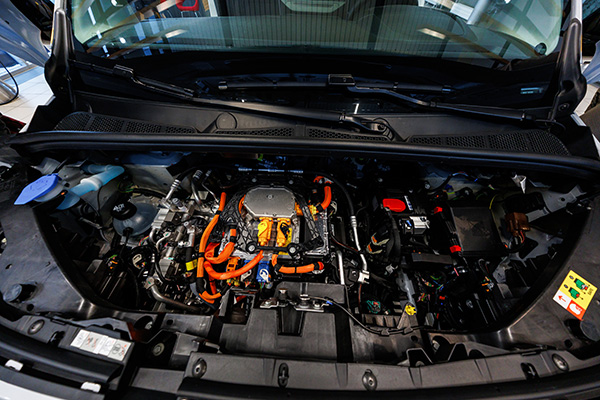
EVs don’t have engine oil changes, but they do have coolant, and that coolant matters more than many owners expect. In an electric vehicle, coolant helps manage heat in critical components like the battery pack, power electronics, and drive unit. Heat control is a big part of how an EV stays efficient and reliable.
When coolant ages, it can lose some of its protective properties. Corrosion protection can degrade, and contaminants can accumulate over time. That can raise long-term risk for expensive components.
This is why an EV coolant service should not be treated like a filler item.
EV Coolant Flush Purpose
Coolant in an EV does not just prevent overheating. It also protects internal passages from corrosion, helps maintain stable operating temperatures, and supports consistent performance during hot weather, highway driving, and fast charging sessions.
Some EV systems use multiple coolant loops. One loop may focus on the battery, another on the power electronics, and another on cabin climate functions. Because these systems are engineered with tight tolerances, coolant quality becomes part of component protection.
Old Coolant Risks In Electric Vehicles
Coolant degrades slowly, so problems rarely appear overnight. Instead, the system loses margin. As corrosion inhibitors weaken, metal surfaces can begin to corrode internally, and that corrosion can shed particles into the system.
Those particles can restrict flow and reduce heat transfer. In extreme cases, flow restriction can lead to hotter operation under load, or reduced ability to manage heat during fast charging. The vehicle may protect itself by limiting power or charging speed, which drivers often notice as a change in performance rather than a clear warning.
Signs EV Coolant Service May Be Overdue
Many EVs do not give obvious “coolant is old” symptoms until the condition is fairly advanced. Still, there are some hints that should raise your attention.
Here are examples of what owners may notice:
- A warning message related to cooling performance or temperature control
- Cabin heat or A/C is behaving less consistently than it used to
- Reduced fast charging speed that seems worse in hot weather
- Fans running more often or running louder during normal driving
- A coolant level that keeps dropping, suggesting a leak
A cooling warning in an EV deserves prompt attention because the components it protects are of high value.
Why EV Cooling Systems Need Clean, Correct Coolant
EV coolant is not always interchangeable with traditional coolant. Many manufacturers specify a particular coolant chemistry because it is compatible with seals, metals, and the system’s design. Using the wrong coolant can reduce protection or create deposits.
A flush and refill is about restoring the correct chemistry. It replaces depleted additives and removes old fluid that may be carrying contaminants. It also gives a chance to check for small leaks and confirm the system is holding pressure the way it should.
A good service is about coolant quality and system health, not just draining and refilling.
Skipping EV Coolant Service Can Become Expensive
When coolant is neglected, internal corrosion and deposits can slowly reduce cooling efficiency. That can increase stress on pumps, valves, and heat exchangers. It can also increase thermal stress on the battery and electronics over time.
Some owners assume EVs are nearly maintenance-free. They are low maintenance compared to many gas vehicles, but that doesn't mean no maintenance at all. EV cooling components are designed to run within a temperature window, and coolant condition helps keep that window stable.
Regular maintenance in an EV often looks different, but it is still real.
How EV Coolant Service Fits Into A Smart Maintenance Plan
The best plan is to follow the manufacturer’s interval, then adjust based on the environment and usage. High heat, frequent fast charging, and heavy stop-and-go can increase thermal cycles. That does not automatically mean you need earlier service, but it does mean you should take the interval seriously.
An inspection during routine service can also catch issues early. A low coolant level or signs of seepage around hoses and connections can be addressed before the system runs low. That kind of early attention is usually cheaper than dealing with a cooling-related fault later.
Get EV Coolant Service in Corpus Christi, TX with Romay's Auto Service
At Romay's Auto Service, we can inspect your EV cooling system, confirm the correct coolant type for your vehicle, and perform the service to keep your battery and electronics protected. We’ll explain what we find and help you stay ahead of heat-related issues as part of regular maintenance.
Call or schedule your service today!
We’re here to help you keep your EV running reliably as it's supposed to.