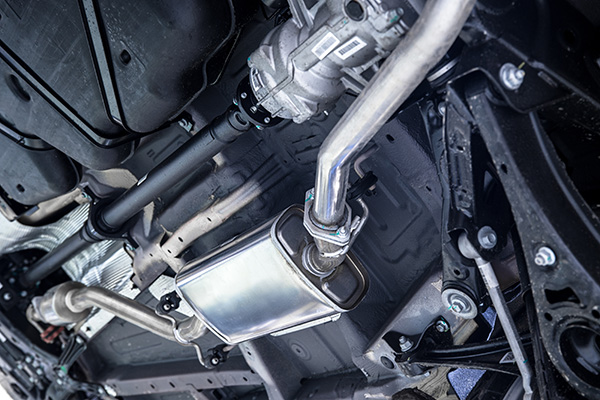
Living near the coast is great until you start looking underneath the car. Salt carried in humid air settles on exposed metal, mixes with moisture, and speeds up corrosion in places most drivers rarely see.
European vehicles are not automatically more vulnerable than other cars, but many use complex exhaust systems, aluminum suspension parts, steel fasteners, protective panels, and tightly packaged components underneath. Once corrosion takes hold in those areas, routine service can become harder, and small repairs can turn into larger jobs.
Salt and Moisture Speed Up Metal Corrosion
Bare steel reacts with oxygen and moisture, and salt speeds up that reaction. You do not have to drive through seawater for coastal exposure to affect a vehicle. Moist salty air can settle underneath the car day after day.
The exhaust, brackets, fasteners, subframes, suspension hardware, and exposed edges of steel components take most of that punishment. At our shop, we pay close attention to areas where dirt and moisture collect because corrosion often develops there before it becomes obvious from outside the vehicle.
Exhaust Systems Take a Lot of Coastal Abuse
The exhaust system constantly heats up and cools down, which already stresses the metal. Add salty moisture, and corrosion can start around clamps, welds, flanges, hangers, and thin sections of piping.
Surface rust on an exhaust pipe is common and does not automatically mean replacement is needed. What concerns us is scaling metal, holes, cracked flanges, leaking joints, or hangers that are becoming weak. A small exhaust leak can also get louder quickly once corrosion widens the damaged area.
Fasteners Can Become a Bigger Problem Than the Failed Part
One frustrating thing about coastal corrosion is that the part needing repair is not always the hardest part of the job. The bolts holding it in place can be.
A rusty exhaust clamp, seized suspension bolt, or corroded underbody fastener can turn a straightforward repair into a much longer process. Hardware can snap during removal, threads can strip, and mounting points can become too weak to reuse. Catching corrosion early gives us more options before the fasteners reach that stage.
Suspension and Subframe Areas Need a Closer Look
European cars often use a mix of steel, aluminum, and rubber throughout the suspension. The aluminum itself does not rust like steel, but corrosion can still develop where different metals meet or around steel hardware passing through aluminum parts.
During an inspection, we look at control arm mounting points, subframes, spring seats, sway bar brackets, and suspension fasteners. Heavy corrosion around a structural mounting point is much more serious than light surface discoloration on a replaceable bracket, so the location and depth of the damage are important.
Underbody Panels Can Hide Corrosion
Many European vehicles have large plastic covers underneath the engine and body. Those panels improve aerodynamics and protect components from direct road debris, but they can also hide leaks, dirt, and corrosion.
Moisture and road grime can collect above the panels where you cannot see them from the driveway. When we remove a service cover, we look at the metal and hardware behind it instead of treating the panel as proof that everything underneath is protected.
A Salt-Damaged Exhaust Leak Can Affect More Than Noise
A corroded exhaust does not always announce itself with a roar. Small leaks can create ticking sounds, unusual exhaust smells, or dark residue around a failing joint.
Leaks farther forward in the exhaust system deserve extra attention because exhaust gases can move toward the passenger compartment under certain conditions. Corrosion near oxygen sensors and exhaust mounting points can also make later repairs more difficult if the threads and surrounding metal deteriorate.
If you smell exhaust inside the cabin, especially while stopped or driving with the windows closed, have the vehicle checked instead of assuming the odor is coming from traffic around you.
Washing the Undercarriage Can Help
Regular washing is one of the simplest ways to reduce how long salt stays on the vehicle. The goal is not to pressure-blast every electrical connector underneath the car, but to rinse accumulated salt and grime from exposed areas.
Regular maintenance also gives us opportunities to catch changes over time. A small patch of surface corrosion can be monitored, while a bracket or fastener that is clearly getting worse can be addressed before it breaks or makes another repair much harder.
Do Not Wait Until Rust Turns Into a Hole
Corrosion repairs are easiest when the metal is still solid. Once an exhaust pipe perforates, a mounting point weakens, or a fastener crumbles during removal, the repair becomes more involved.
That is why coastal vehicles benefit from periodic underbody checks even when they drive perfectly well. We look for active rust, weakened exhaust components, damaged coatings, trapped moisture, and hardware that is becoming difficult to service. The goal is to spot parts that need attention before corrosion decides your repair schedule.
Get European Car Undercarriage And Exhaust Service In Corpus Christi, TX, With Romay's Auto Service
If your European vehicle spends its life near the coast, Romay's Auto Service in Corpus Christi, TX, can inspect the exhaust, suspension hardware, subframes, underbody panels, and other areas where salt-air corrosion tends to develop.
Schedule an undercarriage inspection and catch coastal corrosion before it turns a manageable repair into a larger one.